
Constructive Possession in Michigan Drug Cases: What a Drug Defense Attorney May Examine When Drugs Are Found in a Vehicle
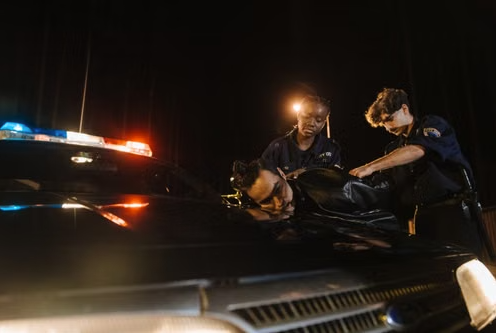
Drugs found inside a vehicle do not automatically establish who legally possessed them. A car may contain several passengers, borrowed property, shared storage areas, or items hidden from one occupant. Michigan law can support a constructive-possession theory, but proximity alone is not the whole analysis.
A drug defense attorney may examine knowledge, control over the location, statements, search procedures, forensic evidence, and each occupant’s access to the area where the substance was found. Those details can change the case quickly.
Let’s understand constructive possession to learn why vehicle drug cases often turn on the connection between a person and the substance, not simply on where police discovered it.
Key Takeaways
- Mere presence is not possession. The prosecution needs evidence connecting the accused to the controlled substance.
- Knowledge matters. The state generally must prove knowing or intentional possession.
- Control can be shared. Constructive possession may be sole or joint, depending on the evidence.
- Vehicle location is relevant, not decisive. A console, bag, trunk, or hidden compartment creates different factual questions.
- Search legality can change the case. An unconstitutional stop or search may create a suppression issue.
How Constructive Possession Works in Michigan
Michigan’s controlled-substance law generally prohibits knowingly or intentionally possessing a controlled substance unless the possession is authorized. MCL 333.7403 contains the core possession prohibition and a penalty structure that varies by the substance and other statutory factors. In a vehicle case, the first task is identifying what the prosecution must prove for the particular charge, rather than assuming the location of the drugs proves ownership.
Actual vs. Constructive Possession
Actual possession generally means the substance is physically held or on the person. Constructive possession is different: it depends on a person’s ability or right to control the substance even when it is elsewhere. More than one person can possess the same item if the evidence supports joint control.
Michigan guidance also draws an important line between presence and possession. Knowing drugs are nearby is not necessarily enough by itself, so a drug defense attorney looks for the specific facts the prosecution says establish knowledge and control.
Knowledge and the Required Nexus
The prosecution may use circumstantial evidence, such as visibility, exclusive access, identifying property inside a container, statements, or conduct suggesting knowledge. The strength of the inference depends on the full context rather than any single fact.
A driver does not automatically possess everything in a vehicle, and a passenger is not automatically excluded from a possession theory. The analysis turns on the evidence connecting each person to the substance.
What a Drug Defense Attorney May Examine
Ownership and Access
Ownership and access can clarify who controlled the area where drugs were found. Counsel may ask who owns or regularly uses the vehicle, whether it was borrowed or rented, where the substance was located, and who had access to that space. Registration, rental records, keys, and witness accounts may help establish that history.
Statements and Conduct
Statements can become important evidence of knowledge or ownership. Counsel may compare the police report with recorded audio, determine whether Miranda issues arose, and distinguish an actual admission from an officer’s interpretation of nervousness, surprise, or ambiguous language.
Forensic and Digital Evidence
Investigators may use fingerprints, DNA, phone messages, location data, purchase records, or packaging evidence. A Michigan criminal attorney may examine whether testing was performed, what the results actually show, and whether the evidence was properly collected and linked to the seized item.
When several people occupied the vehicle, counsel can compare each person’s access, belongings, statements, and relationship to the storage area. An Ann Arbor attorney may also account for local court procedure, while the possession analysis remains focused on knowledge and control.
Search, Seizure, and Case Strategy
Legality of the Stop and Search
Possession analysis should also address how police found the drugs. Counsel may examine the reason for the stop, the duration of the detention, the claimed search authority, and whether officers stayed within their lawful scope. An unconstitutional search can create a suppression issue.
Lab Testing and Chain of Custody
The prosecution must also prove that the seized material is the controlled substance alleged. A defense review may examine the laboratory report, weight or quantity, packaging, evidence seals, chain-of-custody records, and whether the item tested is clearly the same item described in the police report. When the charge depends on drug type or quantity, precision matters.
Related allegations should be separated by offense. A suspected impaired-driving count may require a Lansing DUI lawyer to review OWI evidence, while a firearm allegation may call for a gun defense lawyer to analyze possession and transport issues. One allegation should not substitute for proof of another.
Building the Defense Record
A defense team may preserve video, dispatch records, photographs of the vehicle layout, ownership or rental documents, and information about other occupants. The strongest theory usually comes from verifiable facts about access and control.
Conclusion
Constructive possession is a fact-driven concept. Drugs found in a vehicle may support an investigation, but the state still must prove the required connection between the accused and the substance. Access, knowledge, statements, forensic evidence, search legality, laboratory testing, and the conduct of other occupants can all affect that analysis. A drug defense attorney can evaluate the complete record instead of treating the discovery itself as the end of the case. If you are facing a Michigan drug charge after a vehicle search, contact the Law Office of Kareem Johnson to discuss the evidence and defense issues.
FAQs
What if the vehicle was borrowed or rented?
Borrowed or rented vehicles can complicate access and control. Rental records and evidence of other recent users may become relevant.
Can another occupant admitting ownership end my case?
An admission by another person can be important, but prosecutors may still examine whether the evidence supports joint possession or a separate theory.
Does a prescription matter in a controlled-substance case?
A valid prescription or other lawful authorization can be important when it applies to the specific substance and person involved.
Can police charge more than one occupant with possession?
They can pursue charges against multiple people if they believe the evidence supports joint possession, but each charge still needs proof.
What should be preserved after a vehicle search?
Video, photographs, passenger information, ownership records, receipts, messages, and details about who used the vehicle can help reconstruct access and timing.
Legal note: This article provides general information and is not legal advice. Michigan law and case outcomes depend on specific facts and current law.